CF/PEEK: Performance Breakthroughs and Frontier Applications of Carbon Fiber Reinforced PEEK Composites
Introduction: The Evolution of the “King of Plastics” — From PEEK to CF/PEEK
PEEK (Polyether Ether Ketone) has long been known as the “king of high-performance engineering plastics,” and its resistance to high temperatures, chemical corrosion, and mechanical stress has made it a staple of high-end manufacturing in aerospace, medical devices, and semiconductor fabrication. Yet as industrial demands on material performance grow ever more stringent, pure PEEK has begun to show its limits in certain extreme applications.
The emergence of carbon fiber-reinforced PEEK composites (CF/PEEK) has changed this picture entirely.
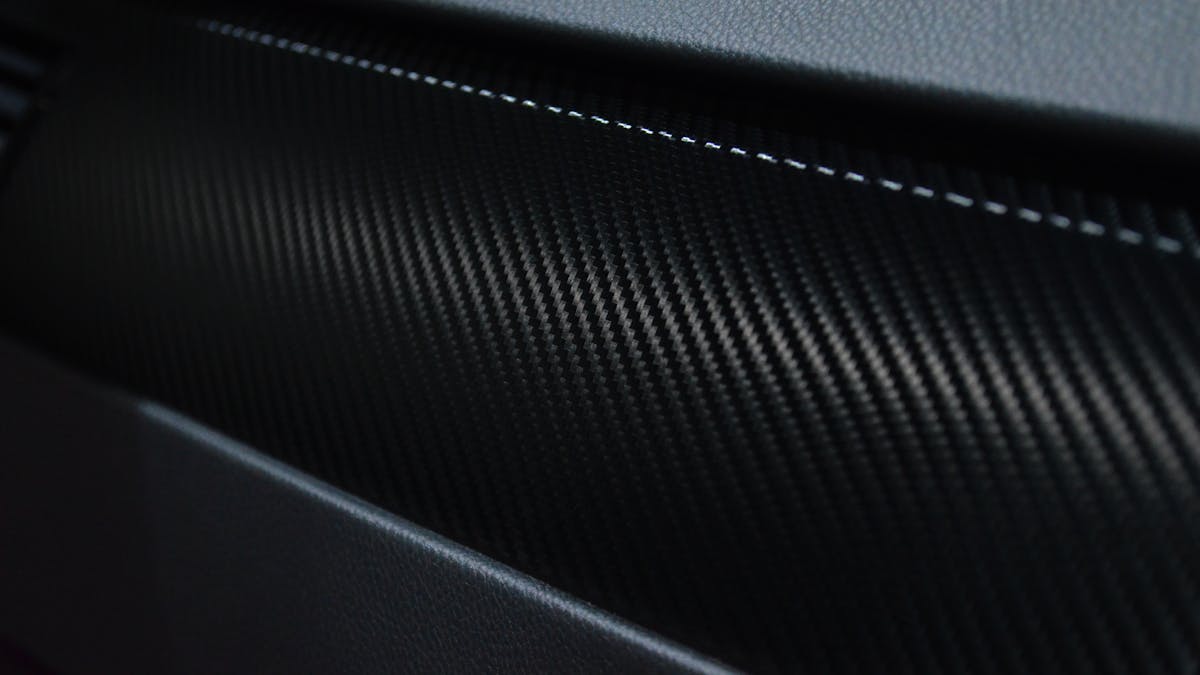
CF/PEEK uses continuous carbon fiber (CF) as the reinforcing phase and PEEK resin as the matrix — a thermoplastic composite that combines carbon fiber’s extraordinary specific strength with PEEK’s excellent toughness and chemical resistance, creating a “super composite” that surpasses either material alone in mechanical performance, thermal stability, biocompatibility, and more.
I. Core Performance Advantages of CF/PEEK
1. Dramatically Enhanced Mechanical Properties
Pure PEEK has a tensile strength of approximately 100 MPa. Reinforced with continuous carbon fiber, CF/PEEK tensile strength rises to 200–400 MPa, depending on fiber content and layup orientation. Flexural modulus increases substantially as well — some high-performance grades achieve 4–6 times that of pure PEEK.
| Property | Pure PEEK | 30% Short-Fiber CF/PEEK | Continuous CF/PEEK Unidirectional Laminate |
|---|---|---|---|
| Tensile Strength (MPa) | ~100 | ~200 | 250–400 |
| Flexural Modulus (GPa) | 3.6 | ~16 | 100–130 |
| Density (g/cm³) | 1.32 | 1.45 | 1.55–1.6 |
This means CF/PEEK can achieve metal-comparable mechanical performance at just 1/5 the weight of steel and 60% the weight of aluminum alloy — an exceptional weight advantage.
2. Elastic Modulus Matching Human Bone
Human cortical bone has an elastic modulus of approximately 15–25 GPa, while metal implants (e.g., titanium alloy at ~110 GPa) are far stiffer than bone. This mismatch leads to “stress shielding” — surrounding bone tissue gradually degrades from lack of mechanical stimulus over time.
By adjusting carbon fiber content, CF/PEEK elastic modulus can be precisely tuned to 10–30 GPa, closely matching natural bone. This fundamentally eliminates the stress shielding problem and promotes bone ingrowth and fusion — making CF/PEEK a leading candidate for next-generation orthopedic implant materials.
3. Thermoplastic Nature Enables Reprocessability
Unlike conventional epoxy-based carbon fiber composites (thermosets), CF/PEEK is a thermoplastic composite with unique advantages:
- Weldability: Compatible with ultrasonic welding, laser welding, and thermoforming — no chemical adhesives required
- Recyclability: Offcuts and scrap can be reprocessed, consistent with green manufacturing trends
- Short cycle times: Thermoforming takes only minutes, far less than the cure times for thermoset composites
- High impact toughness: Superior interlaminar fracture toughness compared to thermoset carbon fiber composites
II. Deep Dive into Key Application Areas
Aerospace: From Structural Components to Radomes
CF/PEEK prepregs are used in the manufacture of aircraft structural components, including:
- Fuselage skins and panels: Lightweight and strong, withstanding temperature and pressure changes in flight
- Nose landing gear and main landing gear doors: Combining structural strength with aerodynamic shaping requirements
- Helicopter rotor blades: Continuous fiber/PEEK hybrid unidirectional reinforcements with outstanding fatigue resistance
- Radar radomes: PEEK composites offer good radar wave transparency, making them an ideal radome material for high-end early warning aircraft and stealth aircraft, replacing traditional fiberglass
Particularly noteworthy is the rapid growth of the low-altitude economy (eVTOL aircraft), where CF/PEEK is becoming the preferred material for critical parts such as fuselage frames and rotor hubs — components that must withstand high-frequency vibration while being as lightweight as possible.
Medical Orthopedics: A Key Battleground for Breaking Foreign Monopolies
Orthopedic implants represent one of CF/PEEK’s most closely watched application areas, with main products including:
- Spinal fusion cages: Used in interbody fusion surgery; PEEK’s elastic modulus is close to bone, and it is radiolucent (no MRI or CT artifacts)
- Bone fracture fixation plates: Replacing metal plates, reducing the need for a second surgery to remove hardware
- Orthopedic bone screws: Excellent biocompatibility, no immune rejection
- Cranial reconstruction materials: Can be formed into custom shapes to meet individualized craniofacial repair needs
However, the raw materials and forming technologies for CF/PEEK implantable devices are currently dominated by European and American companies (such as UK-based Invibio and US-based Solvay). Multiple domestic universities and enterprises are working jointly to achieve mass production of domestically produced CF/PEEK implant materials by 2026–2027, breaking import dependency.
Humanoid Robots and Precision Equipment: The Ideal Structural Lightweighting Solution
With humanoid robots advancing rapidly, CF/PEEK is being widely considered for use in:
- Robot joint linkages and exoskeleton structural components
- Lightweight components for high-speed precision robot arms
- Housings for industrial robot end-effectors
Compared to aluminum alloy, CF/PEEK components can achieve 30–50% weight savings at equivalent strength; compared to thermoset carbon fiber composites, CF/PEEK’s weldability makes complex assembly easier and offers greater manufacturing flexibility.
III. CF/PEEK Manufacturing Process Routes
The main forming processes for CF/PEEK composites currently include:
1. Press Consolidation The most mature process: CF/PEEK prepregs are compressed under high temperature and pressure into plates or structural components. Suitable for high-volume production of flat parts and simple curved surfaces.
2. Automated Fiber Placement (AFP/ATL) Automated placement equipment precisely lays CF/PEEK prepregs on complex curved surfaces — already in use in the aerospace industry.
3. Additive Manufacturing (3D Printing) High-temperature FDM (fused deposition modeling) 3D printing can directly process short-fiber CF/PEEK composites for rapid prototyping of complex parts. Some equipment can handle continuous-fiber PEEK prepreg filaments, further improving part mechanical performance.
4. Injection Molding Suitable for short-cut carbon fiber-reinforced PEEK, appropriate for high-volume production of small precision parts, commonly used in electrical connectors, bearing cages, and similar products.
IV. Market Outlook and Domestic Production Opportunity
Continued Global Market Growth
Market research firms project the global CF/PEEK composite market will exceed USD 1.5 billion in 2026, with approximately 25% compound annual growth. Key growth drivers include:
- Continued strong demand for aerospace lightweighting
- Rapid expansion of the medical orthopedic implant market
- Demand for high-end composites from humanoid robots and new energy vehicles
- Explosive domestic demand driven by China’s manufacturing upgrade
Domestic Production Accelerating
Compared to pure PEEK domestication (where Chinese domestic manufacturers have already achieved thousand-ton scale production), CF/PEEK composite domestication is relatively behind but accelerating:
- Leading domestic PEEK manufacturers are jointly developing continuous CF/PEEK prepregs with top universities, progressively entering the aerospace market
- Multiple national-level projects on “carbon fiber/PEEK composite orthopedic implant materials” have been launched, targeting the elimination of import dependency
- CF/PEEK has been included in China’s new quality productive forces priority materials development list, with policy and funding support
V. YFT Tech’s PEEK Solutions
As a professional supplier of high-performance PEEK materials, YFT Tech closely tracks CF/PEEK composite technology trends and provides customers requiring lightweight, high-strength solutions with:
- PEEK raw materials: Including pure PEEK, glass fiber-reinforced PEEK (GF/PEEK), carbon fiber-reinforced PEEK (CF/PEEK), and other grades
- PEEK precision machined parts: CNC turning and milling, injection molding — meeting the custom requirements of aerospace, medical, semiconductor, and robotics industries
- Technical consulting services: Assisting customers in transitioning from metals or thermoset composites to PEEK/CF/PEEK, with material selection guidance and process support
Conclusion: CF/PEEK — A Core Material for the Next Decade
From aircraft fuselages to artificial bones, from humanoid robots to low-altitude aircraft, CF/PEEK composites are quietly penetrating every corner of high-end manufacturing with irreplaceable performance advantages. Against the backdrop of China’s accelerating push toward advanced materials domestic production, CF/PEEK is not merely an engineering material — it is a core pillar of future industrial competitiveness.
To master CF/PEEK is to hold the entry ticket to the next generation of high-end manufacturing.
To learn more about PEEK and CF/PEEK composite material solutions, please contact the YFT Tech professional team for customized consulting.