PEEK in Marine and Ocean Engineering: Material Opportunities Under China's Shipbuilding Superpower Strategy
Introduction: China’s Shipbuilding Ascent Drives Surge in High-Performance Material Demand
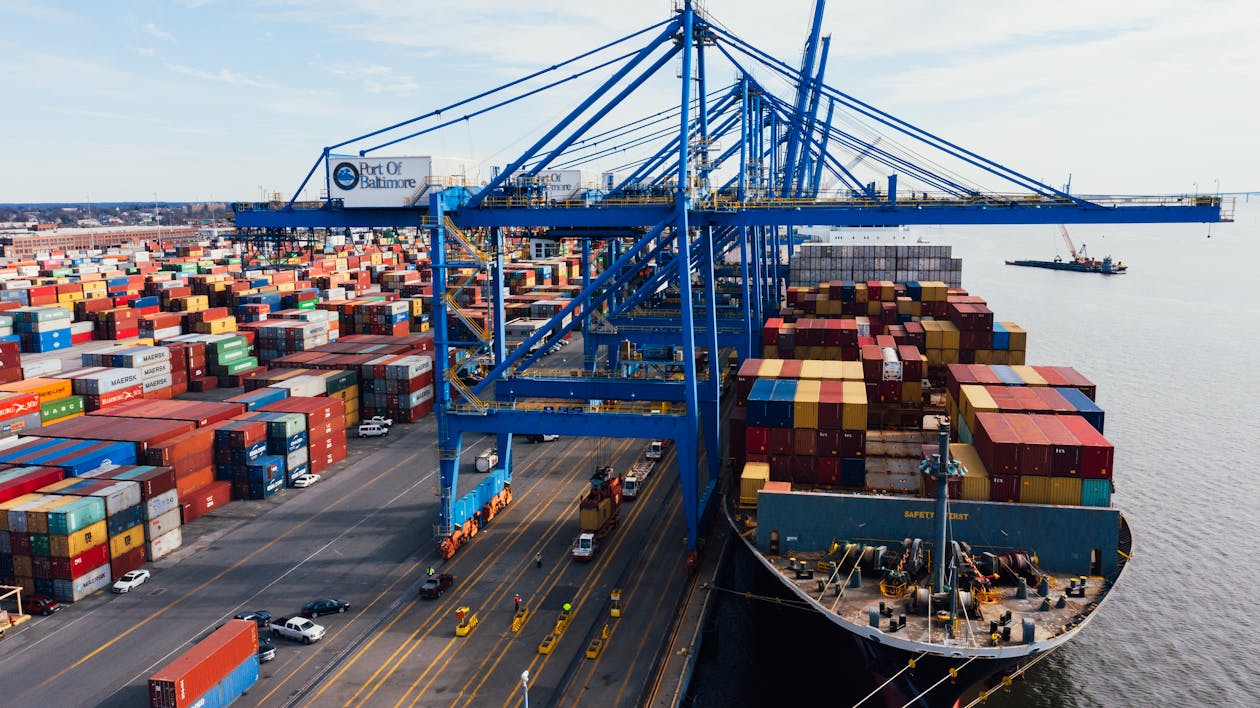
From 2025 to 2026, China’s shipbuilding industry has continued to lead the world. According to data from the Ministry of Industry and Information Technology, China’s vessel completions have ranked first globally for multiple consecutive years, commanding a market share exceeding 50% — spanning LNG carriers, ultra-large container ships, offshore special-purpose vessels, and deep-sea research ships.
The ocean, however, is one of the most demanding engineering environments on Earth: relentless salt spray corrosion, deep-water pressure, extreme temperature swings, mechanical vibration, and biofouling all present serious challenges to traditional metal materials. PEEK (polyether ether ketone), the highest-performance thermoplastic engineering polymer available, is leveraging its unique material properties to carve out broad application territory in marine and offshore engineering.
Part 1: Why Is PEEK Well-Suited to Marine Environments?
Compared to traditional metal materials, PEEK offers advantages in marine engineering across several key dimensions:
🌊 Resistance to Seawater and Chemical Corrosion
PEEK exhibits extremely high chemical inertness against seawater, salt solutions, chlorides, and the vast majority of acidic and alkaline media. The “pitting corrosion” and “electrochemical corrosion” problems that afflict metal components in high-salinity environments are virtually absent with PEEK. This dramatically extends component maintenance intervals and substantially reduces vessel operating costs.
🔧 High Strength × Lightweight
PEEK’s density is approximately one-seventh that of steel, yet when reinforced with carbon fiber or glass fiber, its specific strength can approach or even exceed certain alloy steels. In modern ship design where weight reduction and increased payload are paramount, this combination offers significant strategic value.
🌡️ Stability Across a Wide Temperature Range
From the -60°C conditions of polar sea routes to the high-temperature steam environments of engine rooms, PEEK maintains stable mechanical properties without brittle fracture or creep — ensuring long-term reliable operation of critical components.
🔇 Vibration and Noise Reduction
PEEK’s low friction coefficient and excellent damping properties give it a natural advantage in vibration and noise reduction for bearings, bushings, and other moving components. This is particularly valuable for naval vessels, where acoustic signature control is critical.
Part 2: Key Application Areas of PEEK in Marine and Offshore Engineering
1. Propulsion Systems: Bearings, Bushings, and Seals
The propulsion shaft system is one of the most critical mechanical systems on any vessel, operating continuously under seawater lubrication, high load, and low-speed high-torque conditions. Water-lubricated bearings are a key component in this system:
- Conventional rubber or bronze bearings suffer from rapid wear and high noise levels
- PEEK composite bearings exhibit extremely low friction coefficients under oil-free conditions (approximately 0.1–0.2), with wear rates only a fraction of bronze bearings
- They can withstand steam cleaning at up to 200°C without swelling or deforming from seawater immersion
- Their excellent dimensional stability and installation precision significantly extend propulsion shaft maintenance intervals
PEEK is also widely used in propeller shaft sealing rings, pump casing bushings, valve seats, and other fluid machinery sealing components, with typical replacement life three to five times longer than traditional materials.
2. Subsea Pipelines and Riser Systems
Deepwater oil and gas production represents the most technically demanding segment of offshore engineering. In umbilical cable and flexible riser systems, PEEK serves as:
- Pressure-resistant outer sheathing: Withstanding hydrostatic pressure from thousands of meters of water depth (exceeding 30 MPa), preventing fluid ingress
- Electrical insulation layer: Providing dielectric isolation between high-voltage cables and hydraulic conduits, preventing short circuits and signal interference
- Wear-resistant layer: Protecting contact zones between risers and guide frames against abrasion, extending overall system life
Compared to traditional nylon or PVDF materials, PEEK demonstrates superior long-term stability in high-temperature, high-pressure environments contaminated with hydrogen sulfide (H₂S) and carbon dioxide (CO₂), and has become the preferred solution in deepwater oil and gas applications.
3. Deep-Sea Exploration and Underwater Robots (ROV/AUV)
As China’s deep-sea exploration capabilities advance rapidly — with assets including the Fendouzhe crewed submersible (capable of reaching full-ocean depth) and the Jiaolong — the ROV and AUV industry has flourished. PEEK’s key roles in this field include:
- Pressure hull structural components: Replacing titanium alloy for load-bearing at depths of thousands of meters while achieving 30%–50% weight reduction
- Sensor sealing windows: PEEK transmits visible and near-infrared light to a certain degree, enabling its use in underwater optical instrument enclosures
- Connectors and penetrators: PEEK’s excellent dimensional stability ensures reliable sealing under deep-water high pressure, preventing water ingress
- Electric propulsion system insulation structures: Maintaining stable electrical insulation performance in wet environments
PEEK is progressively replacing aluminum and titanium alloys in underwater robotics, driving the lightweighting and extended service life of deep-sea equipment.
4. Shipboard Electronics and Communications Systems
Modern vessels are increasingly reliant on electronics — from phased array radar to satellite communications — and high-frequency signal transmission components impose extremely demanding dielectric requirements on materials:
- PEEK’s dielectric constant is approximately 3.2 (at 1 GHz), with very low dielectric loss, making it highly suitable at microwave frequencies
- It withstands marine humid and hot environments with negligible degradation of electrical properties over time
- Used in radome substrates, high-frequency connector insulators, and specialized PCB backplanes
As shipboard communications advance toward Ka-band and millimeter-wave frequencies, PEEK’s low dielectric loss advantage will become even more pronounced.
5. Marine Fire Protection and Safety Systems
PEEK is inherently flame retardant (halogen-free), rated UL94 V-0 — it does not contribute to combustion, does not drip, and requires no flame retardant additives. This is essential in enclosed shipboard environments:
- Pipeline system valves, flanges, and sealing rings
- Fire pump bearings and sealing structures
- Insulating components for emergency lighting and control systems
International classification societies (DNV, LR, CCS) mandate flame retardancy for shipboard materials, and PEEK naturally complies with the relevant regulations without the need for additional certification.
Part 3: China’s Shipbuilding Industry Upgrade and the PEEK Domestication Opportunity
Currently, a significant share of high-performance marine PEEK materials still depends on imports (from Victrex in the UK and Evonik in Germany). As China’s “Made in China 2025” strategy continues to advance and the quality and capacity of domestically produced PEEK steadily improve, the marine sector is a strategic high ground for accelerated domestic PEEK substitution.
Key breakthrough areas:
| Application | Domestication Progress | Technical Challenge |
|---|---|---|
| Water-lubricated bearings | Volume supply already underway | Dimensional precision and long-term fatigue life |
| Deep-sea cable and pipeline sheathing | Pilot-scale stage | Ultra-high molecular weight and low-creep formulations |
| Underwater robot structural components | Rapidly developing | Precision machining of complex geometries |
| Shipboard electronics insulation | Incremental substitution | Dielectric consistency certification |
For shipbuilders and system integrators, establishing deep partnerships with domestic suppliers capable of precision PEEK processing is not merely a cost reduction strategy — it is a strategic commitment to supply chain security and self-reliance.
Part 4: Application Case Studies
Case Study 1: Propulsion Bearing Replacement on a Domestic LNG Carrier Replacing conventional bronze bearings required drydock access with a downtime of approximately 5–7 days. After switching to PEEK composite bearings, the maintenance interval was extended from 18 months to 5 years, saving over RMB 2 million in maintenance costs over the vessel’s full lifecycle.
Case Study 2: Pressure Hull Weight Reduction on a Deep-Sea ROV A research-grade ROV replaced a portion of its aluminum alloy structural components with PEEK-CF (carbon fiber-reinforced PEEK). The redesigned hull maintained structural integrity at 6,000 meters working depth while reducing total weight by approximately 18 kg, meaningfully improving underwater endurance and maneuverability.
Part 5: Conclusion — PEEK Has a Major Role to Play in China’s Ocean Power Strategy
China is accelerating its ambition to become a maritime power, and across commercial shipbuilding, deep-sea exploration, and ocean resource development, demand for high-performance materials will continue to climb. With its unrivaled combination of properties, PEEK is becoming an indispensable material foundation for this blue-economy revolution.
YFT Tech specializes in the research, development, and precision processing of high-performance PEEK materials, offering end-to-end solutions from material selection to finished components. We invite ship design institutes, offshore equipment manufacturers, and marine research organizations to explore collaboration with us and advance PEEK’s broad application across the blue economy.
📧 Contact us to learn more about marine PEEK solutions, or request a free technical consultation and sample evaluation.