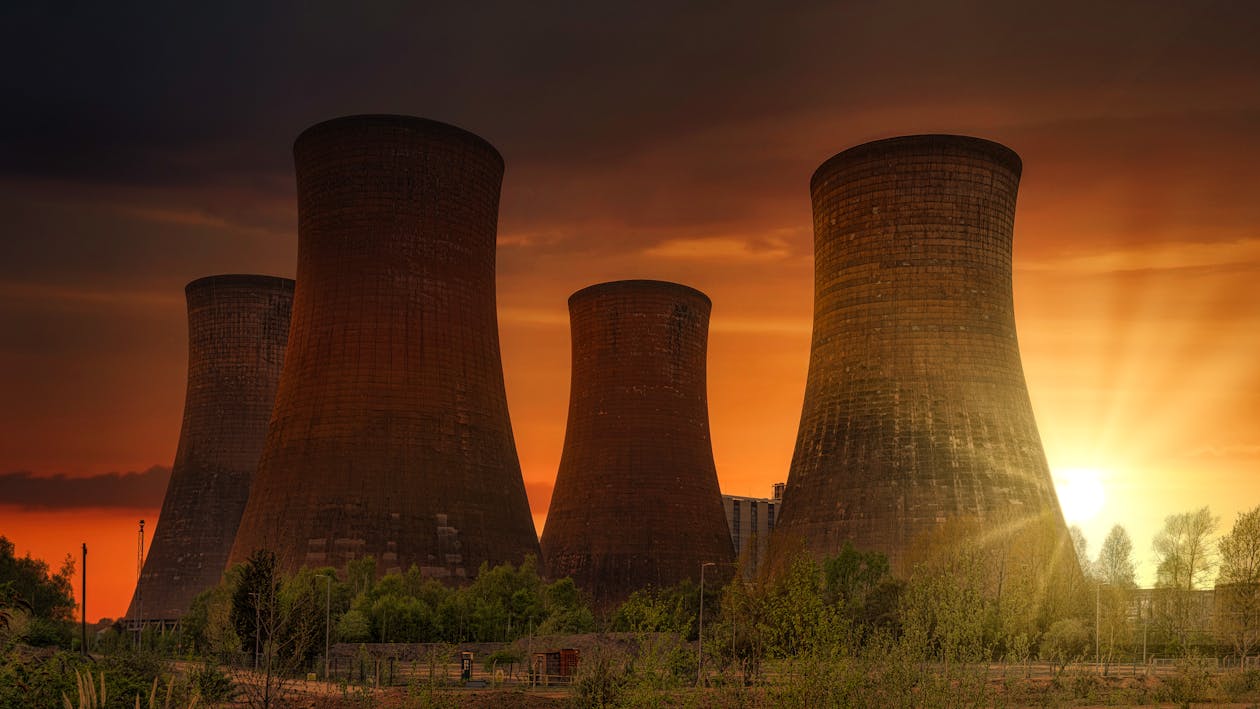
PEEK in Nuclear Power Plants: Supporting China's Rise as a Nuclear Energy Powerhouse
Introduction: Material Challenges in the Nuclear Renaissance
2026 is set to be a landmark year in China’s nuclear power history. By the end of 2025, mainland China had 59 nuclear power units connected to the grid with a total installed capacity of 62.25 GW, ranking third globally. As multiple units under construction at Zhangzhou, Xudapu, Sanao, and other sites come online, China’s nuclear power installed capacity is expected to surpass France in 2026, rising to second in the world.
Even more significant is the imminent commercial start-up of the world’s first land-based commercial small modular reactor (SMR) — “Linglong One” (ACP100) — expected to begin commercial operations at Changjiang, Hainan in 2026, marking a new milestone in China’s nuclear technology leadership.
Nuclear power plants are among the most demanding environments in all of industrial engineering: sustained nuclear radiation, a high-temperature and high-pressure primary loop, highly corrosive coolants — traditional metals and standard engineering plastics simply cannot perform reliably over the long term. Against this backdrop, PEEK (polyether ether ketone) has steadily emerged as the high-performance polymer of choice for critical nuclear plant components.
Part 1: Why Do Nuclear Plants Need High-Performance Polymers?
The operating environment of a nuclear power plant can be characterized across three dimensions:
| Environmental Factor | Typical Parameter | Effect on Materials |
|---|---|---|
| Nuclear radiation dose | γ-rays 10³–10⁹ rad | Molecular chain scission, degradation of mechanical properties |
| Operating temperature | Primary loop coolant 300–350°C | Softening, creep, dimensional instability |
| Chemical corrosion | Boric acid solution, deionized water | Hydrolysis, swelling, chemical decomposition |
| Service life | Design life of 60 years | Long-term material aging and fatigue |
Metal materials, while capable of withstanding high temperatures and pressures, cannot be used in certain electrical insulation applications due to their conductivity, and they are heavy and difficult to machine. Standard engineering plastics (PA, POM, PC, etc.) degrade rapidly under intense radiation and elevated temperatures. PEEK fills precisely this gap.
Part 2: PEEK’s Suitability for Nuclear Applications — From Molecular Structure to Engineering Practice
2.1 Exceptional Radiation Resistance
PEEK’s molecular backbone contains an abundance of benzene rings (aromatic ring structures), which endow it with radiation resistance far superior to aliphatic polymers. The aromatic rings effectively “absorb” and dissipate the impact of high-energy gamma radiation, reducing radiation-induced chain scission.
Research has shown that PEEK retains good mechanical properties (tensile strength, impact toughness, and others — with retention rates exceeding 80%) even after cumulative radiation doses of 10⁸–10⁹ rad, far outperforming most thermoplastic polymers. This performance makes PEEK a top candidate in nuclear radiation resistance material assessments.
2.2 High-Temperature Stability
PEEK has a glass transition temperature (Tg) of approximately 143°C and a melting point of 343°C, maintaining structural integrity at a continuous service temperature of 250°C. For high-temperature components in the vicinity of the primary loop, carbon fiber-reinforced PEEK (CF-PEEK) can further enhance high-temperature stiffness and creep resistance to meet even more demanding service conditions.
2.3 Chemical Corrosion Resistance
Reactor coolant water typically contains boric acid (H₃BO₃) for reactivity control, along with additives such as lithium hydroxide, with pH varying over a wide range. PEEK resists the vast majority of inorganic acids, alkalis, and oxidizing media, exhibiting extremely low mass loss and dimensional change in long-term immersion tests — ensuring the long-term reliability of seals and structural components.
2.4 Low Radioactive Contamination and Easy Decontamination
Nuclear plants impose strict requirements on material “decontaminability” — surfaces must not excessively adsorb radionuclides, and they must be cleanable to safe levels. PEEK’s smooth surface and strong chemical inertness result in extremely low radioactive contamination uptake, with excellent decontamination factors (DF), helping to reduce radiation dose to maintenance personnel.
Part 3: Key Applications of PEEK in Nuclear Power Plants
3.1 Cable Insulation Sheaths
Instrumentation and control (I&C) cables in nuclear plants must operate reliably for decades under radiation, high temperature, and humidity. PEEK as a cable sheath and insulation material provides:
- Excellent electrical insulation (volume resistivity >10¹⁶ Ω·cm)
- Radiation-resistant longevity (halogen-free, producing no toxic fumes)
- Inherent flame retardancy and self-extinguishing behavior, complying with fire protection requirements for nuclear-grade cables
Compared to traditional mineral-insulated (MI) cables, PEEK-insulated cables are lighter and easier to install, making them the preferred solution for I&C systems in next-generation nuclear plants.
3.2 Pump and Valve Sealing Components
The sealing systems of critical primary loop equipment — including the main coolant pump, charging pumps, and similar — must maintain long-term sealing performance under high-pressure, high-temperature boric acid water environments. PEEK sealing rings, piston rings, and bearing bushings can:
- Withstand system pressures exceeding 15 MPa
- Operate stably in high-temperature boric acid water
- Reduce metal particle contamination of the medium (lowering the risk of coolant activation)
3.3 Nuclear Instrumentation Detector Components
Core neutron flux measurement systems — such as fission chambers and miniature ionization chambers — require precision insulating materials to isolate high-voltage signal cables from detector housings. PEEK’s outstanding radiation-resistant insulation properties and precision machinability make it the material of choice for detector insulation supports, connector bodies, and similar components, ensuring accurate signal transmission.
3.4 Auxiliary Structural Components for Nuclear Fuel Assemblies
In spent fuel storage and transfer systems, PEEK is used to manufacture non-structural auxiliary components such as spacing supports and guide tube bushings in spent fuel storage racks. Its radiation stability and gamma-ray resistance ensure the structural integrity of spent fuel pools over storage periods spanning decades.
3.5 Nuclear Radiation Shielding Composite Materials
Recent research (published in 2024 via ScienceDirect) demonstrates that incorporating high-density fillers (such as barium sulfate BaSO₄ or boron carbide B₄C) into PEEK matrices creates multifunctional composite materials with combined gamma and neutron shielding capability. These can be fabricated into complex geometries via 3D printing, providing new tools for localized shielding optimization and dose management in nuclear plants.
3.6 Nuclear Island I&C Equipment Housings and Connectors
I&C equipment within the nuclear island (sensors, transmitters, actuators, etc.) requires housings and connectors made from materials with good insulation, radiation resistance, and long service life. PEEK machined or injection-molded parts can replace traditional epoxy resin and polysulfone materials, delivering superior overall performance and extended service life.
Part 4: Linglong One — New Material Opportunities in the SMR Era
“Linglong One” (ACP100) features an integrated pressurized water reactor design, with the reactor core, steam generators, and primary coolant pumps all housed within a single pressure vessel. This approach dramatically reduces the number of piping connections and lowers the risk of large-break loss-of-coolant accidents (LOCA). The compact design imposes higher requirements for miniaturized, integrated, high-reliability components.
PEEK’s advantages in small modular reactor (SMR) applications include:
- Weight and cost reduction: Replacing metal with lighter PEEK components facilitates modular transportation and installation of the compact reactor
- Integrated electrical insulation: In the space-constrained integrated pressure vessel, PEEK enables a single component to serve both structural support and insulation functions
- Long service life with minimal maintenance: SMRs emphasize 60+ year design life and low operating and maintenance costs — PEEK’s long-term stability is a perfect fit
Part 5: Market Outlook — Nuclear Construction Boom Drives Demand for Advanced Materials
China has been accelerating nuclear power development since 2020, with the State Council Executive Meeting approving approximately 10 new reactor units annually for multiple consecutive years. According to current plans, China’s nuclear installed capacity will exceed 100 GW by 2030, making it the third-largest power source after thermal and hydropower.
Each new nuclear unit under construction typically uses hundreds to thousands of kilograms of PEEK (including cables, seals, and I&C components). As the number of units under construction continues to grow, the nuclear sector has become a significant incremental market for high-performance polymer materials.
At the same time, the license renewal and life extension needs of existing nuclear plants should not be overlooked — upgrading existing components to PEEK can substantially improve safety margins and extend equipment life, representing a considerable market opportunity over the next decade.
Conclusion: Hardcore Materials Safeguarding the Foundation of Clean Energy
Nuclear power plants represent one of the most extreme material performance environments in all of modern industry — there is no room for compromise. PEEK demonstrates its true credentials as “the king of high-performance polymers” precisely under these extreme demands — standing up to radiation, withstanding high temperatures, resisting corrosion, and earning trust.
At this historic juncture of China’s accelerating rise in nuclear energy, the development and domestication of PEEK materials deserves equal attention. From import dependence to self-reliance, from limited product grades to a full series lineup — China’s high-performance polymer industry is growing alongside the nuclear power industry, together writing China’s clean energy story.
Welcome to contact YFT Tech to learn about our professional PEEK material solutions for the nuclear power, energy, and high-end manufacturing sectors.