PEEK's Deep Applications in Rail Transit: The Key Material Supporting Safe and Reliable High-Speed Rail
Introduction: The Materials Revolution Behind the World’s Largest High-Speed Rail Network
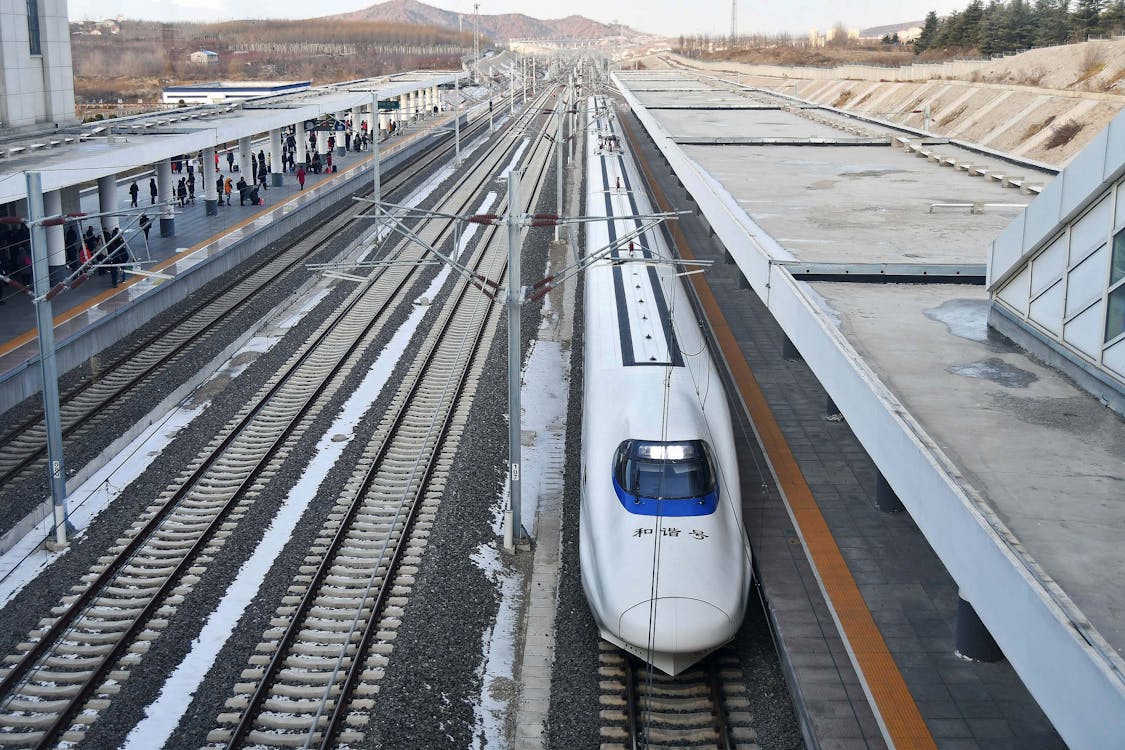
By early 2026, China’s high-speed rail operating mileage has exceeded 46,000 km, firmly holding the global number one position. Fuxing EMU trains operate at a maximum 350 km/h, while intercity rail, metro, and maglev systems develop in parallel — forming the world’s most complex and highest-ridership modern rail transit network.
Behind this vast system, every 350 km/h high-speed train is a collection of extreme engineering environments:
- Bearings sustaining multi-tonne loads under high-speed rotation
- Electrical systems operating stably under 25 kV high voltage and intense vibration
- Vehicles operating reliably year-round across temperature ranges from -40°C to +60°C
- Braking systems decelerating hundreds of tonnes of train smoothly within seconds
Under these demanding conditions, PEEK (Polyether Ether Ketone) is becoming the engineering plastic of choice for high-end rail transit components — quietly supporting the safety and speed of China’s high-speed rail network.
I. Core Material Challenges in Rail Transit
1.1 Vibration and Impact
High-speed trains in motion generate vibration frequencies ranging from low (< 10 Hz) to high (> 1,000 Hz) from rail joints, switches, and curves. Components must maintain dimensional stability and mechanical strength under continuous vibration and impact loads.
1.2 High-Speed Friction and Wear
At 350 km/h, the friction surface velocity of moving parts such as bearings, gears, and guide wheels is extremely high, imposing stringent demands on wear resistance and low friction coefficient. Dry-friction performance in lubrication failure scenarios is equally critical for operational safety.
1.3 Electrical Insulation and Electromagnetic Compatibility
High-speed rail power systems use 25 kV single-phase AC power, with complex electrical potential differences between the vehicle body and track. Insulating components must meet strict specifications for voltage withstand, creepage distance, and arc resistance. Simultaneously, high-density electronic equipment requires materials with good electromagnetic shielding compatibility.
1.4 Lightweighting Demands
Every tonne reduction in train weight reduces energy consumption by approximately 1%, while also reducing track wear and infrastructure maintenance costs. Replacing metals with high-performance engineering plastics is an important pathway to structural lightweighting.
1.5 All-Weather Reliability
Trains must operate reliably in extreme cold (Northeast China, Inner Mongolia), high heat (South China), and high humidity (Yangtze River Delta) climate conditions. A material’s temperature adaptation range and weather resistance are critical.
II. PEEK’s Core Performance Advantages
| Property | Pure PEEK | Conventional Engineering Plastic (PA66) | Aluminum Alloy |
|---|---|---|---|
| Continuous service temperature | 250°C | 120°C | 150°C |
| Tensile strength | 100 MPa | 80 MPa | 310 MPa |
| Density | 1.32 g/cm³ | 1.14 g/cm³ | 2.70 g/cm³ |
| Chemical resistance | Excellent | Good | Moderate |
| Friction coefficient (dry) | 0.36 | 0.40 | 0.60 |
| Electrical insulation | Excellent | Good | Conductive |
| Flame rating | UL94 V-0 | UL94 HB | — |
PEEK’s core advantage: Metal-comparable strength at only 1/6 the density of steel and half that of aluminum alloy, combined with outstanding insulation, chemical resistance, and self-lubrication — exactly the “all-in-one” engineering material rail transit engineers have long sought.
III. Key PEEK Application Scenarios in Rail Transit
3.1 Bearing Cages
Bearing cages represent one of the most important PEEK applications in high-speed rail drivetrain systems. Each Fuxing EMU train uses over 1,000 bearings, and their cages must withstand extreme speeds, loads, and temperatures.
Why PEEK?
- Bearing steel cages are dense (7.8 g/cm³); PEEK cages achieve over 65% weight reduction
- Excellent self-lubricating properties maintain low-friction operation even under insufficient grease supply
- High-precision forming ensures cage dimensional stability, preventing deformation under high-speed rotation
- Carbon fiber-reinforced PEEK (CF-PEEK) cages operate stably from -60°C to +200°C
Recommended Grades:
- CF30-PEEK: 30% carbon fiber; dramatically improved strength and stiffness
- GF30-PEEK: 30% glass fiber; balancing strength and cost
3.2 Pantograph Insulators and High-Voltage Connectors
The pantograph is the critical device through which high-speed rail draws current from the overhead contact line, operating at 25 kV high voltage under high-speed sliding friction.
PEEK applications in pantographs and high-voltage electrical systems include:
- Insulating support seats: Isolating high-voltage circuits from the vehicle body structure, preventing leakage
- High-voltage connector housings: High-voltage resistant, flame retardant, vibration resistant
- Insulating sliders and guides: Providing electrical isolation in the pantograph-wire contact zone
Key Performance Requirements:
- Dielectric strength > 30 kV/mm
- Flame rating UL94 V-0, eliminating fire risk
- Maintaining connection reliability under continuous vibration conditions
PEEK’s volume resistivity exceeds 10¹⁶ Ω·cm, and its flame resistance meets EN 45545 railway fire protection standards — making it one of the best-performing engineering plastics available for these applications.
3.3 Braking System Seals and Friction Components
Seals, guide rings, and wear-resistant liners in high-speed rail hydraulic braking systems must withstand:
- Prolonged immersion in brake fluid (hydraulic oil)
- High pressure (up to 20 MPa and above)
- Transient high temperatures during braking (>150°C)
PEEK seal advantages:
- Resistant to hydraulic oil, brake fluid, and other industrial fluids
- Extremely small deformation under high pressure (low creep), reliable sealing
- Long maintenance-free service life, reducing lifecycle maintenance costs
Compared to metal guide rings, PEEK guide rings are lighter, have lower friction, and cause less wear to sealing surfaces — making them the mainstream material choice for high-end hydraulic system sealing.
3.4 Track Fastener Insulating Blocks and Sleeper Insulating Components
Railway signaling systems transmit train position information through track circuits, requiring electrical insulation between the rail and sleepers. Conventional rubber insulating blocks harden and crack in extreme cold, while PEEK insulating pads and sleeves offer a far wider temperature operating range.
PEEK track insulation component characteristics:
- Maintains insulation performance from -60°C to +150°C
- High strength to withstand impact loads from passing trains
- Dimensionally stable, no expansion or deformation from temperature/humidity changes
- UV-resistant, suitable for long-term outdoor use
3.5 Lightweight Interior Structural Components
Interior panels, seat frames, and HVAC duct brackets in metro and intercity trains are also potential application areas for PEEK composites. Replacing metal brackets with injection-molded carbon fiber-reinforced PEEK (CF-PEEK) components can achieve:
- 40–60% weight reduction, reducing overall vehicle energy consumption
- No painting required, durable and attractive surface finish
- Lubrication-free maintenance, reducing operating costs
IV. Expanded Applications in Urban Rail Transit
Beyond high-speed rail, urban rail transit (metro, light rail) is also a significant market for PEEK. Urban rail has its own distinctive requirements:
| Application | PEEK Form | Core Value |
|---|---|---|
| Wheel guides | Wear-resistant guide blocks | Noise reduction, vibration damping, extended maintenance intervals |
| Door mechanisms | Rail sliders | Self-lubricating, maintenance-free |
| HVAC systems | Fan impellers | Lightweight, moisture-resistant |
| Signal equipment | Connector insulators | High insulation, fire-safe |
| Brake calipers | Guide pin bushings | Wear-resistant, brake fluid resistant |
V. Market Outlook: Rail Transit Driving Sustained PEEK Demand Growth
According to the latest industry data, the global PEEK market is projected to grow continuously from 2026 to 2035 at a mid-to-high single-digit CAGR. China is one of the world’s largest PEEK consuming markets, with rail transit becoming an important incremental source of high-performance plastics demand:
Growth Drivers:
- China’s “14th Five-Year Plan” railway planning: High-speed rail network targeting 50,000 km by end of 2025; urban rail transit lines continuing to expand, creating massive demand for high-performance components
- Existing line maintenance and upgrades: Early high-speed rail lines entering major overhaul cycles, with substantial replacement demand for wear-resistant and insulating components
- Speed increases and lightweighting: Next-generation high-speed trains (targeting 400 km/h) impose further elevated material performance requirements
- Domestic substitution: In key component sectors, domestic materials companies are accelerating import substitution, with PEEK domestication accelerating
VI. YFT Tech: Professional PEEK Solutions for Rail Transit
As a specialist PEEK materials supplier, YFT Tech provides a full range of PEEK materials and machined components for the rail transit industry:
Recommended Product Lines
| Product | Specifications | Primary Applications |
|---|---|---|
| PEEK round rods/plates | φ10–500 mm / 2–100 mm thickness | Machined bearing cages, insulating components |
| CF30-PEEK | 30% carbon fiber-reinforced | High-strength structural components, conductive shielding |
| GF30-PEEK | 30% glass fiber-reinforced | General structural components balancing strength and cost |
| Wear-grade PEEK | Contains PTFE/graphite | Seals, sliding components, guide blocks |
| Injection-grade PEEK pellets | UL94 V-0 compliant | High-volume injection-molded connectors, insulators |
Our Advantages
- Rapid prototyping: CNC-machined prototype parts supporting design validation
- Full technical support: Material selection, process optimization, failure analysis
- Volume supply assurance: Stable raw material sourcing and inventory management
- Quality certification: ISO 9001 quality management system; complete material certificates provided
Conclusion
China’s high-speed rail is both a major national strategic asset and a global engineering benchmark. In a system that demands speed, safety, and efficiency, every small component matters enormously. PEEK, with its ability to perform in extreme environments, is writing an important chapter for high-performance engineering plastics in the rail transit sector.
From high-speed rotating bearing cages to quietly pressure-bearing insulated connectors, every PEEK application represents materials science responding precisely to engineering challenges. As China’s rail transit network continues to expand and upgrade technologically, the application prospects for PEEK in this field will only grow broader.
Questions about PEEK applications in rail transit? Contact the YFT Tech technical team for professional material selection consulting and sample support.