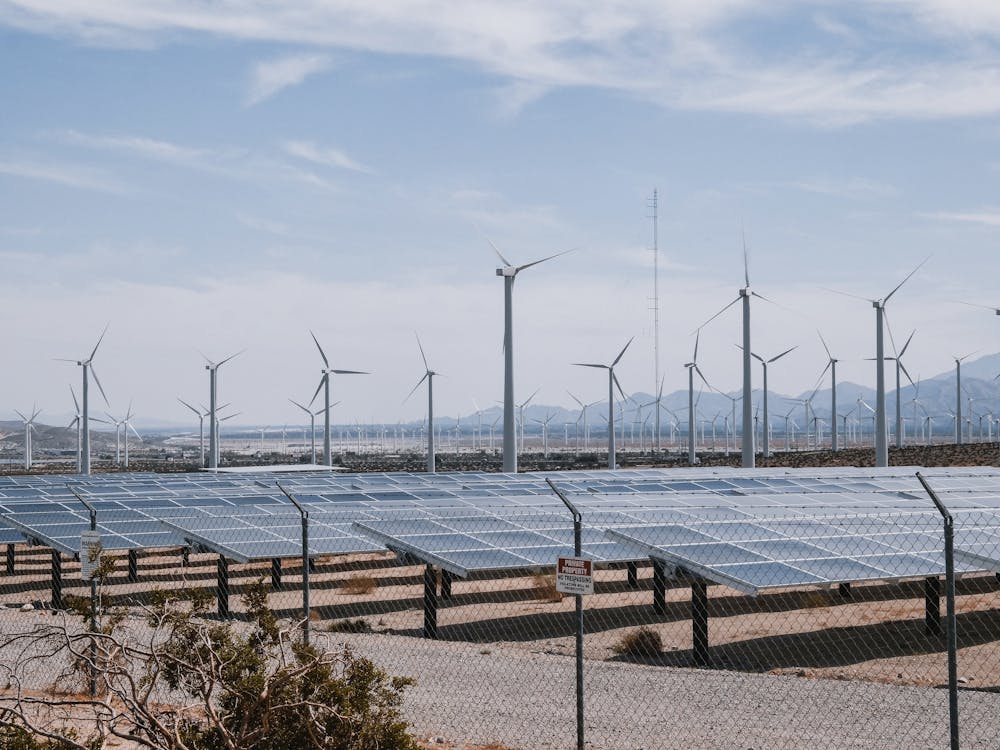
PEEK Powering the Green Transition: A Rising Star Material in Renewable Energy
Introduction: When High-Performance Materials Meet the Green Revolution
In 2026, the global energy transition is advancing at an unprecedented pace. According to the International Energy Agency (IEA), renewables will account for over 90% of new global power generation capacity additions by 2030. Behind this green revolution, high-performance materials are playing an increasingly critical role.
PEEK (Polyether Ether Ketone) — the high-performance polymer known as the “king of plastics” — is accelerating its penetration from traditional aerospace and medical device applications into wind power, solar PV, hydrogen energy, and other renewable energy applications. According to the latest market research, the global PEEK market is projected to reach USD 3.91 billion by 2035, with renewable energy and electric vehicle-related applications emerging as the most important growth engines.
I. Wind Energy: Making Turbines Lighter and More Durable
1. Material Challenges in the Scaling Trend
Modern offshore wind turbines are advancing toward single-unit capacities of 15 MW and beyond, with blade lengths routinely exceeding 100 meters. This scaling trend creates severe material challenges:
| Challenge Dimension | Specific Manifestation |
|---|---|
| Weight burden | Single blades weighing over 50 tonnes, placing enormous stress on bearings and structures |
| Harsh environment | High salt spray, high humidity, extreme temperature swings at sea |
| Maintenance costs | Offshore O&M costs 3–5× higher than onshore |
| Service life | Required reliable operation for 25+ years |
2. PEEK Solutions
PEEK’s applications in wind energy are expanding rapidly:
Pitch Bearing Cages
- Conventional metal cages require frequent lubrication maintenance
- PEEK’s self-lubricating properties enable maintenance-free operation
- Significant weight reduction, reducing pitch system inertia
Blade De-icing System Components
- Outstanding low-temperature performance (retains toughness below -60°C)
- Electrical insulation meets heating system requirements
- UV aging-resistant, extending service life
Generator Insulation Systems
- 260°C continuous service temperature meets high-power generation requirements
- Excellent dielectric properties improve generation efficiency
- Non-moisture-absorbing, suitable for offshore humid environments
II. Solar PV Industry: Pursuing Ultimate Efficiency and Durability
1. New Requirements from High-Efficiency Cell Technologies
As TOPCon, HJT, and perovskite tandem cell technologies commercialize, solar cell manufacturing processes are placing higher demands on materials:
- Higher process temperatures: New cell architectures require higher-temperature deposition and annealing processes
- Stricter cleanliness: Low extractables to protect cell efficiency
- Longer equipment service life: Reducing production line maintenance downtime
2. Key PEEK Applications in Solar PV Equipment
Wafer Handling Components
- High-purity PEEK does not leach contaminants
- Antistatic grade controllable, preventing wafer damage
- Higher mechanical strength than traditional PTFE
PECVD/PVD Equipment Seals
- Withstands high-temperature vacuum environments (above 200°C)
- Completely inert to process gases (SiH₄, NH₃, etc.)
- Stable sealing performance over time, reducing maintenance frequency
Module Laminator Components
- Withstands high-temperature flow of EVA/POE encapsulants
- Excellent mold release performance, improving production efficiency
- 3–5× longer service life than conventional materials
III. Hydrogen Energy: Supporting the Ultimate Zero-Carbon Solution
1. Material Pain Points Throughout the Hydrogen Value Chain
Hydrogen as the “ultimate clean fuel” faces stringent material challenges throughout its production, storage, transport, and use:
- High permeability: Hydrogen molecules are extremely small and easily permeate conventional sealing materials
- Embrittlement risk: Metal materials are prone to hydrogen embrittlement in hydrogen environments
- Extreme conditions: High pressure (70 MPa), cryogenic (-253°C liquid hydrogen), high temperature (>150°C in fuel cell stacks)
2. PEEK’s Breakthrough Applications in Hydrogen Energy
Proton Exchange Membrane Fuel Cells (PEMFC)
PEEK is emerging as an ideal material for fuel cell bipolar plates and sealing systems:
| Application Area | PEEK Advantage |
|---|---|
| End plates | Lightweight, insulating, corrosion-resistant |
| Sealing gaskets | High-temperature resistant, low hydrogen permeability, long service life |
| Gas diffusion layer supports | High mechanical strength, chemical inertness |
High-Pressure Hydrogen Storage Systems
- Type IV hydrogen storage cylinder liner material: PEEK film has extremely low hydrogen permeability
- Valve seals: Reliable sealing at 70 MPa high pressure
- Hydrogen fueling nozzle components: Wear-resistant, self-lubricating, insulation safety
Electrolytic Water Hydrogen Production Equipment
- PEM electrolyzer bipolar plate substrates
- Alkaline electrolyzer membrane support structures
- High-temperature steam electrolysis (SOEC) seals
IV. Sustainability: PEEK’s Green Credentials
1. Environmental Benefits from a Lifecycle Perspective
Compared to traditional metallic materials, PEEK applications in renewable energy equipment deliver significant environmental benefits:
Reducing Carbon Footprint
- Lightweight design reduces transportation and installation energy consumption
- Maintenance-free characteristics reduce operational carbon emissions
- Extended equipment service life reduces replacement frequency
Improving Resource Efficiency
- Replaces scarce metals (cobalt, nickel-based alloys)
- Manufacturing energy consumption lower than metal smelting
- Reduced use of lubricants and maintenance consumables
2. PEEK in the Circular Economy
It is worth noting that PEEK’s recyclability continues to improve:
- Thermoplastic advantage: Can be reheated and re-formed multiple times for easier recycling
- Downcycling: Retired PEEK from high-end applications can be used in general industrial applications
- Chemical recycling: New depolymerization technologies are under development
The EU’s latest PEEK market analysis report notes that sustainability will become the core competitive dimension for the European PEEK market from 2026–2035, with suppliers demonstrating clear environmental advantages positioned to capture greater market share.
V. YFT’s Green Materials Solutions
As a specialist service provider focused on PEEK high-performance materials and precision manufacturing, we are deeply engaged with the renewable energy supply chain:
Our Capabilities
✅ Wind energy: Pitch bearing cages, yaw system sliders, cable protection components
✅ Solar PV: Wafer handling components, vacuum seals, laminator parts
✅ Hydrogen energy: Fuel cell seals, hydrogen storage system valve assemblies
✅ General new energy: Motor insulation systems, power electronics device bases
Our Advantages
- Materials expertise: Years of PEEK processing experience with deep understanding of material characteristics
- Process maturity: Integrated CNC precision machining, injection molding, and additive manufacturing
- Quality reliability: Stringent process control and inspection standards
- Response speed: Rapid iteration capability from prototype to production
Conclusion: Materials Innovation Driving the Energy Transition
Large-scale deployment of renewable energy requires not only policy support and capital investment, but also breakthroughs and innovation in key materials. PEEK, with its comprehensive advantages in heat resistance, corrosion resistance, lightweighting, and service life, is becoming the “hidden champion” of green energy equipment.
As the global PEEK market scales toward USD 3.9 billion, Chinese companies’ domestic production capabilities in this field are also advancing rapidly. For equipment manufacturers in wind power, solar PV, hydrogen energy, and other sectors, selecting the right PEEK material partner will be a key decision for enhancing product competitiveness.
To learn about customized PEEK solutions for renewable energy applications, contact our technical team: dongrong.li@yft-tech.com